February is National Eating Disorder Awareness Month, a time that invites us to look more closely at something many people deal with quietly. Eating disorders are often misunderstood as being about food, weight, or appearance. In reality, they are frequently about pain, control, fear, trauma, perfectionism, and the deep human need to feel safe in one’s own life and body.
For many people struggling, food becomes a language when words feel unavailable. Restricting, bingeing, purging, or obsessively controlling food intake can become ways of coping with emotions that feel overwhelming or unmanageable. These behaviors are not signs of weakness or vanity. They are signs that someone is hurting and trying to survive with the tools they have.
One of the things that makes eating disorders especially dangerous is how easily they hide. People can appear high-functioning while privately battling intense anxiety around food, shame after eating, or exhaustion from constantly negotiating what, when, and how much they are “allowed” to consume. Many continue to show up for work, care for families, excel in school, or maintain social roles, all while feeling trapped in a never ending internal struggle.
And food is everywhere. It’s not just a part of functions. We need it in order to survive. So unlike other disorders that you can walk away from dangerous triggers and behaviors, with eating disorders, you’re forever forced to be surrounded by yours.
This often leads to isolation.
Isolation plays a powerful role in maintaining that struggle. Shame convinces people they should handle things alone. Fear tells them others will not understand. Comparison whispers that someone else has it worse, so their pain does not count. Over time, this isolation deepens, making it harder to ask for help or even admit there is a problem.
Mental illness often thrives in secrecy. When someone is caught in an eating disorder, connection can feel threatening. Meals become stressful. Social gatherings that involve food are avoided. Invitations are declined. Slowly, life shrinks. The disorder begins to take up more space than relationships, hobbies, and joy.
Yet healing almost always requires connection. Recovery is rarely about simply changing eating habits. It involves learning new ways to cope with emotion, rebuilding trust with one’s body, and creating safe spaces where vulnerability is met with compassion rather than judgment. It involves discovering that struggles do not have to be carried alone.
Eating Disorder Awareness Month is not just about education or statistics. It is about reminding people that support exists and recovery is possible. It is also about encouraging communities to become safer spaces for honest conversations about mental health. When we talk openly, we reduce stigma. When we listen without trying to fix, we make it easier for someone to speak. When we show up consistently, we help break the loneliness that keeps so many people stuck.
Healing also does not always begin in traditional therapy rooms. Sometimes it starts in creative spaces where pressure drops and expression feels safer. Art, movement, writing, and shared experiences can open doors that words alone cannot. Creating something alongside others can gently reconnect people to themselves and to community.
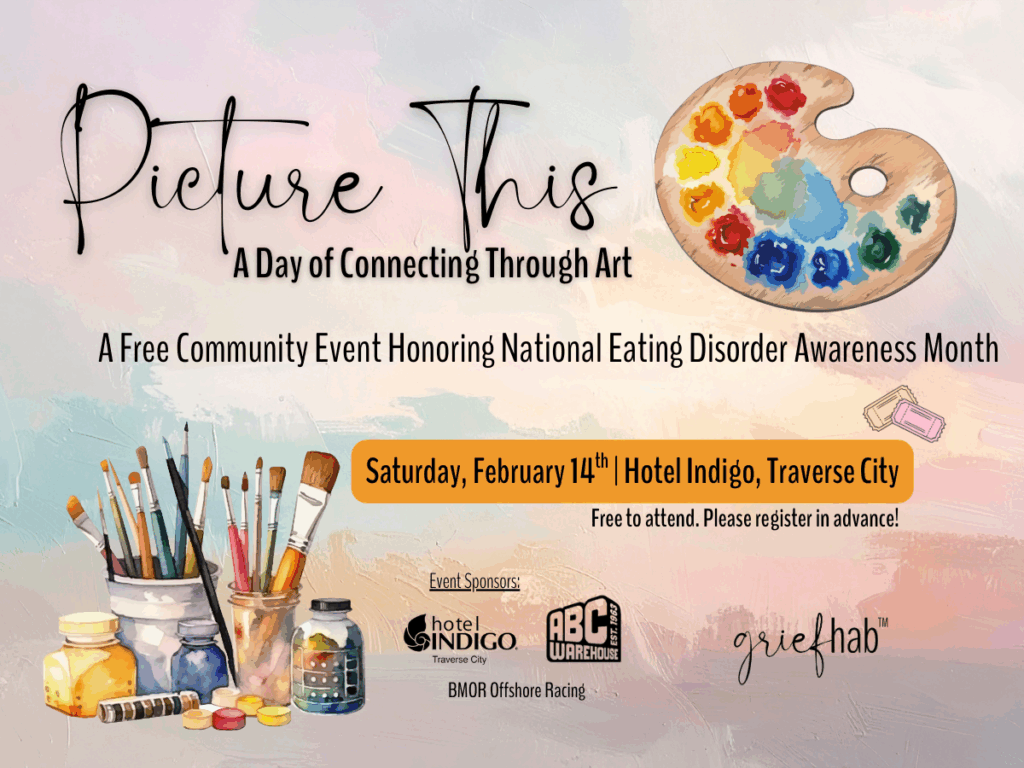
This month, conversations around mental health and eating disorders are happening in many forms, including opportunities for people to step out of isolation and into shared healing spaces. Griefhab is hosting Picture This – an afternoon of connecting and Healing Through Art.
It’s important to have gatherings where people come together simply to create, connect, and breathe a little easier without expectations or pressure. Spaces like these remind us that healing does not have to be solitary. Sometimes it begins with sitting at a table, picking up a paintbrush, and allowing yourself to be present with others who understand the need for gentleness.
If you or someone you love is struggling with food, body image, or an eating disorder, know that reaching out is not a burden to others. Support systems exist, and healing is possible even when it feels far away. Small steps count. Honest conversations count.
Allowing someone to sit beside you in the hard moments counts. Awareness months come and go, but the need for compassion, understanding, and connection remains year-round. Let this February be a reminder that no one should have to navigate mental health struggles in isolation. Healing often begins when we choose connection over silence and allow ourselves to be seen, supported, and human together.
Remember that you can reach out anytime! Griefhab is here for you 24/7!!